en
en
 de
de
 ru
ru
 uk
uk
 es
es
Currency selection
The entire agricultural market on one website
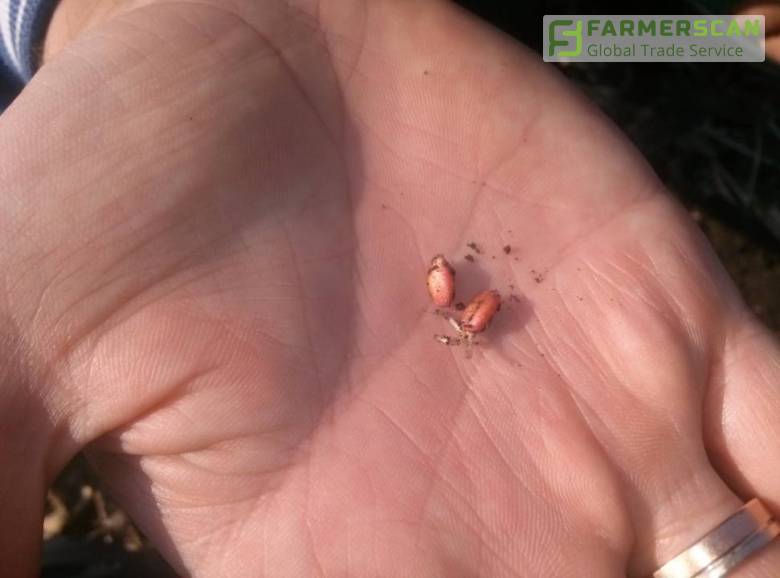
"The autumn period for winter wheat is the time of formation of potential opportunities. It is difficult to overestimate the importance of quality sowing for the further yield. The main task that the producer faces by the sowing is getting friendly and on-time sprouting.
About the features of winter grains sowing in the sharp continental climate was told at the International Field Day-2018, which was held on September 6 in the village Sozonovka in the Kirovohrad Oblast.
"According to the research of the Institute of Grain Crops, the best results are obtained when the sowing is carried out before the rain than after it. The field emergence in this case is much higher, and consequently – the best end result. In case of making the decision to sow before the rain, first of all, it is necessary to offer insights into growth technology. In addition to the fungicidal treatment of seeds, it is necessary to conduct insecticidal treatment. This will protect the seeds that can lie in the ground for a long time, from seedling pests and pests in the topsoil. You also need to change the seeding rate. Taking into account the sowing conditions, the sprouting period may be delayed, and autumn tillering may be high. In accordance with this, it is desirable to increase the seeding rate on 10-20% of the recommended amount. The depth of sowing should be reduced, so that in the case of precipitation of effective rainfall, friendly shoots will be obtained. It is not recommended to sow more than 5 cm deep, the optimal depth is 3-4 cm", said Umrykhin Nazar, head of the laboratory of bio-adaptive technologies in the APP, candidate of agricultural sciences.
About calendar terms of sowing, Umrykhin Nazar said the following:
"The question of the sowing time is topical now. According to the researches, which were conducted at the experimental station in recent years, the optimal time for winter wheat, which is sown by the weedfree fallow, is the second half of September-early October. For sorts that are sown by nonfallows, such as sunflower and soybean, the best date is the period from 10th to 25th of September. If the forecrop is spring barley – the best will be sowing during the period from 10th to 17th of September."
Mostypan Nykolay – associate professor, candidate of biological sciences, head of the department of general agriculture of the Central Scientific and Technical University told on the one of his seminars which sowing should be at the end of the autumn growing period.
"The sowing time, the seeding rate and the depth of seeding are the three main agrotechnical factors that allow to achieve the necessary sowing structure for the end of the autumn growing period.
With their help, you can control crops and achieve the desired indicators", said the scientist.
At the time of the nongrowing season, the following parameters will be optimal:
Such indicators will ensure the formation of vigorous plants that will provide a good wintering.