en
en
 de
de
 ru
ru
 uk
uk
 es
es
Currency selection
The entire agricultural market on one website
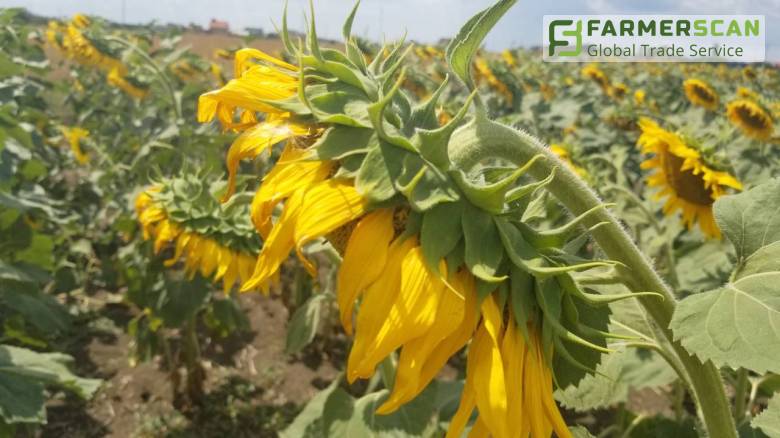
According to foreign researchers, annual losses of crops come up to 17-34% of the potential yield due to weed infestation.
Traditional technology
By the classical growing technique of sunflower, the main methods of infestation control are mechanical and chemical treatment. Soil-applied herbicides are used as chemical methods during preplant cultivation or straight after sowing, and graminicides are also applied during vegetation.
The effectiveness of soil-applied herbicides depends on moisture and soil consistency. Therefore, the field dry surface with an appreciable quantity of flocculants and plant remains reduces the herbicides efficiency by 20-30%. The rate can reach 100% under critical conditions.
The most popular preparations for sunflower are soil-applied herbicides based on active ingredients: acetochlorine, methyl chlorine, propisochlor. Depending on the rate of application and weather conditions, soil-applied herbicides hold protection shield for 4-8 weeks.
The graminicides are used for sunflower crops independently of the stage of culture development. The preparations, which are based on Quizalofop-P-tefuryl (Panther), Clethodim (Select), Quizalofop-p-ethyl (Targa Super, Miura), are usually used.
Advantages:
- wide variety of sunflower hybrids and breeds of domestic and foreign selection;
- price.
Disadvantages:
- lack of control over dicotyledonous weeds during the vegetation (except for mechanical treatment);
- lack of control over sunflower broomrape;
- in case of drought or low temperatures, soil-applied herbicides are ineffective, in some cases cause phytotoxicity.
«Clearfield» technology
Weed control is provided by the Euro-Lightning postemergent herbicides (Imazamox 33 g/l, Imazapir 15 g/l) by sunflower hybrids, which are resistant to it. Common sunflower will die out under the influence of this preparation.
Treatment with the using of Euro-Lightning is carried out during the stage of 2-4 leaves with a rate of 1.0-1.2 l/ha. The herbicide has an effect on a wide range of cereal and dicotyledonous weeds and controls problem species, such as common ragweed (Ambrosia artemisiifolia), ordinary cocklebur (Xantium strumarium) and sunflower broomrape (Orobanche cumana).
Advantages:
- complex effect on dicotyledonous and cereal weeds, including problematic ones;
- is effective by minimal and zero treatment;
- flexible terms and rates of application;
- prolonged effect, functioning through the leaves and soil;
- one treatment per season.
Disadvantages:
- there are possible aftereffects and restrictions by crop rotation;
- depressing of the main crop is possible in case of irregular application, overdose and availability of covering places;
- complicated control of sunflower dead beans;
- it is not recommended to apply on the one field more often than once in 3 years.
It is useful to remember that Euro-Lightning cannot be used in a tank mixture with fertilizers, organophosphate insecticides or graminicides. The herbicide is applied at a maximum rate of 1.2 l/ha at later terms, in the stage of 8 leaves against the sunflower broomrape.
«Clearfield Plus» Technology
In 2016, BASF introduced an improved system on the market for the protection of sunflower crops. Combination of resistant hybrids and herbicide Euro Lightning® Plus strengthen treatment efficiency and reduces pesticide pressure on the field. The herbicide differs from its precursor preparation by formulation and active ingredients content (Imazamox 16.5 g/l, Imazapir 7.5 g/l). In addition, technology provides more flexible dosing of the preparation – from 1.6 to 2.5 l/ha.
The producer warns against the usage of the preparation Euro-Lightning Plus on any other hybrids, except hybrids Clearfield Plus.
ExpressSun (Express, Sumo) Technology
This technology consists of a combination of herbicide Express 75 vr.r. (Tribenuron-methyl 750 g/kg) and sunflower hybrids, which are resistant to this preparation. The treatment is carried out during the stage of 2-8 leaves, at the rate 20-50 g/ha of the preparation with sticking agent.
The most effective applying will be during the period when the weeds are actively growing and are in the beginning phases of development:
- ragweed – up to two true leaves;
- lamb's quarters – up to 4 true leaves;
- goose grass – up to phase 3-4 rings;
- sow-thistle – rosette stage;
- annual cereals – 4-6 leaves.
Advantages:
- no restrictions in crop rotation;
- high efficiency against ragweeds, sow-thistle, lamb's quarters;
- effective by minimal and zero treatment;
- can be applied in one or in two stages – the first time during the stage of 2-4 leaves and the second – 6-8 leaves.
Disadvantages:
- no effect on cereal weeds;
- has no soil effect, therefore, does not hold off the second wave of weeds;
- slight influence on grown weeds;
- weeds that are resistant to the preparation – leafy spurge, goose grass, cocklebur, corn bindweed.
The last small minus, which is common for Euro-Lightning and Express, is the duration of preparation action. The first visible influence of the treatment is visible on 7-8th day, and by cool weather – even on 10-th day. First signs of affection appear on growing point. The complete weeds death happens in 2-3 weeks. The retarded action of herbicides can keep agronomists and farmers in tense and doubt about result.
We hope that the listed advantages and disadvantages of each of the technologies will help you to make the right choice. You can find out more about the assortment and choose sunflower seeds on our website.