en
en
 de
de
 ru
ru
 uk
uk
 es
es
Currency selection
The entire agricultural market on one website
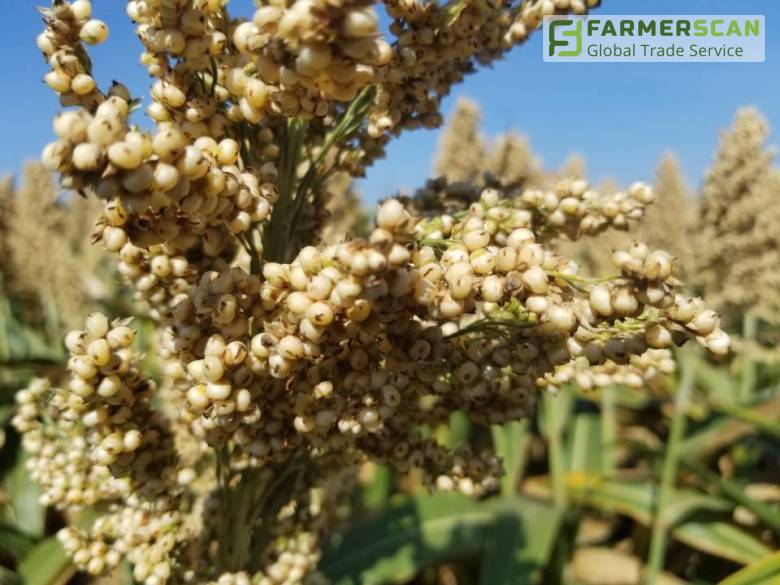
Sorghum is the fourth largest cereal crop in Ukraine by volume of exports. By productivity, it is as good as corn, and it even exceeds by several times in droughty regions.
According to the data of US Department of Agriculture, Ukraine hit the top ten of world leaders in sorghum yields in 2016-2017. The average point ranges within 60-80 c/ha, and the maximum result was registered last year in the Kyiv Oblast , and was 144.3 c/ha.
Despite the high yield and profitability of sorghum, the area under this crop did not exceed 50 thousand hectares in 2018 according to data of the scientific production enterprise "Ukrsorgo". One of the reasons for the low popularity of cereal sorghum is the lack of information about the growth technology. In this article, we go into the details, which herbicides can be used on sorghum.
Sorghum is negatively affected by weeds and the yield decreases sharply without a reliable protection system. At the beginning, the plants grow very slowly, it is important to keep the field clean and prevent the weed infestation during the first 1.5-2 months. Herbicides are applied on several phases: before sowing or before crop sprouting, and in the phase of 3-5 leaves.
Before sowing and before sprouting
As a rule, there is enough amount of vegetative weeds on the field during the sowing of sorghum. If mechanical treatments are not planned, it is recommended to use glyphosate-based contact herbicides.
Soil herbicides will also be effective during this phase. Before application, it is important to ensure that the sorghum seeds are treated with the safener. Otherwise, the crop failure is possible.
It is important to note that many factors have influence on effect of herbicides: the soil type, amount of precipitations, the soil treatment technology, the application time, and so on. The tables show approximate application rates of herbicides, which should be corrected depending on the situation.
|
Way of action and application |
Action spectrum |
Active ingredient |
Preparation |
Rate, l/ha |
|
Systemic action through the leaves. The application in 7-14 days before sowing on vegetative weeds. |
Contact herbicide |
Glyphosate red muriate, 520 g/l |
Roundup Extra |
2.0-4.0 |
|
Systemic action through the leaves and roots. Application before weeds appearing. |
Dicotyledons |
Mesotrione 480 g/l |
Callisto* |
|
|
Contact action through the roots. Application before weeds appearing. |
Grass weeds |
S-metolachlor |
Dual Gold |
1.5-2.0 |
|
Dicotyledons |
Pendimethalin, 330 g/l |
Stomp* |
|
|
|
Systemic action through the leaves and roots. Application before weeds appearing. |
Annual grass and dicotyledonous weeds |
S-metolachlor+ terbuthylazine |
Primextra TZ Gold |
4.5 |
|
S-metolachlor+ atrazine |
Primextra Gold |
2.5-3.5 |
*The preparation for sorghum is not registered in Ukraine. Information is available on the base of data of Arvalis Institut du Végétal.
Phase of 3-5 leaves
Slow growth and poor control of weed infestation of crops can cause re-treatment. If the soil herbicides are not applied before planting, you can use the preparation Primextra Gold or Primextra TZ Gold. The effectiveness of such postemergence treatment is usually lower than of preemergence treatment, because herbicides do not kill overgrown grass weeds, which have more than 2-3 leaves.
Preparations based on 2,4-D are used in the phase of 3-5 leaves as postemergent herbicides against dicotyledonous annual and perennial weeds. When this happens, weeds from the cabbage, goosefoot and nightshade families are killed, as well as rhizogenous and offset weeds are strongly affected.
In comparison with corn, sorghum is more sensitive to herbicides, therefore, in case of noncompliance with rates or terms of application it stands behind in growth, and the yield significantly decreases. Delay with treatment leads to a decrease in the effectiveness of the herbicide, as well as to the affection of crop plants. Therefore, it is necessary to follow the recommendations of the producer during the treatment.
|
Way of action and application |
Action spectrum |
Active ingredient |
Preparation |
Rate, l/ha |
|
Systemic action through the leaves and roots. The application during vegetation. |
Annual cereal and dicotyledonous weeds |
S-metolachlor+ terbuthylazine |
Primextra TZ Gold |
4.5 |
|
S-metolachlor+ atrazine |
Primextra Gold |
2.5-3.5 |
||
|
Contact action through the leaves. Application on vegetative weeds. |
Annuals and some perennial dicotyledonous weeds |
Bentazon 480 g/l |
Bazagran* |
|
|
Treatment during vegetation in the phase of 3-5 leaves of culture |
Annuals and perennial dicotyledonous weeds, including resistant to 2,4-D and 2M-4X |
Dicamba, 480 g/l |
Dianat |
0.4-0.8 |
|
2-ethylhexyl aether, 2,4-D, 452, 42 g/l + florasulam 6.25 g/l |
Prima |
0.4-0.6 |
||
|
2,4-D, 344 g/l + dicamba, 120 g/l |
Dialen Super* |
1.0-1.5 |
||
|
Prosulfuron, 750 g/kg |
Peak |
0.015-0.02 |
||
|
Systemic action of preparation. Application in the phase of 3-5 leaves of sorghum |
Cereal and dicotyledonous weeds. The only post-emergent graminicide on sorghum |
Penoxssulam, 25 g/l |
Citadel |
0,6-1,0 |
* The preparation for sorghum is not registered in Ukraine. Information is available on the base of data of Arvalis Institut du Végétal.
Except the correct selection of herbicide and timely treatment, there are several general recommendations that contribute to the protection of sorghum sowings from weeds:
- Contribute to the fast appearing of sorghum seedling and closing of the rows. For these reasons, it is important to avoid early sowing dates into cold soil. Soil temperature at depth of seeding should be at least 12°C. The uniformity of the seedlings is influenced by uniformity of sowing in depth; the optimum depth is 2-4 cm.
- Try to carry out treatments under favorable weather conditions: air humidity >70%, wind is at most 3-5 m/s, air temperature – up to 25°C.
- Combine chemical control with mechanical treatments.