en
en
 de
de
 ru
ru
 uk
uk
 es
es
Currency selection
The entire agricultural market on one website
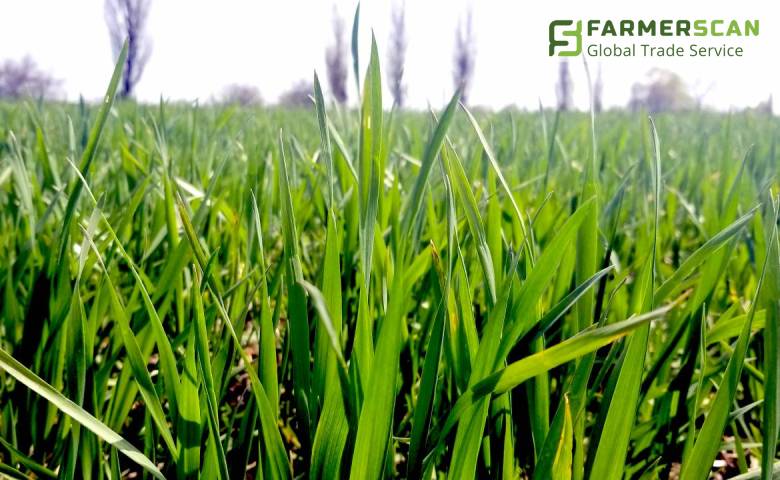
Rainy weather and changes of air temperature, which were observed during early May, can restrict the spread of pests, but contribute to the development of crop diseases of most cultures. This information is reported by the website superagronom.com. The team of this website refers to results of phytosanitary inspections of State Service of Ukraine on Food Safety and Consumer Protection.
https://superagronom.com/news/7173-pogodni-umovi-znizili-aktivnist-shkidnikiv-prote-spriyayut-rozvitku-hvorob
Thus, barley flea beetles, cereal leaf rollers, aphids, leafhoppers and leeches were found in the grain crops. For the moment, the number of pests does not exceed the economic threshold of harmfulness (ETH). In addition, a corn bug was found in the grain crops in the Donetsk, Dnipropetrovsk, Zaporizhia, Kirovohrad, Luhansk, Mykolaiv, Odessa and Kherson Oblasts. There were 0.5–1 exemplars/sq.m, maximum 3 exemplars./sq.m. by the maintaining of accounting of winter crops in the border lands. The crop bug damaged 1-5% of plants, in some places up to 10% of plants.
It is important to add that the treatment of sowing and border lands is recommended, if the number of pests has exceeded the economic threshold of harmfulness (ETH).
|
Pests |
Amount |
|
|
adult insects |
larvae |
|
|
Corn bug |
2-4 exemplars/sq.m. during the phases of sprouting, tillering and stem elongation. |
4-6 exemplars/m during flowering and grain formation |
|
Barley flea beetles |
30 exemplars on 100 movements with a skimming net during tillering stage. |
|
|
Aphids |
500-100 exemplars/sq.m. during the tillering stage; 10 aphids on the stem during the phases of the stem elongation and grain formation; 20-30 exemplars/spike in the phase of milky ripeness. |
|
|
Leafhoppers |
150 exemplars on 100 movements with a skimming net in a tillering stage; 100 exemplars on 5 movements with a skimming net in the ear formation phase. |
|
|
Cereal leaf rollers |
|
50-150 larvae/sq.m. during the stem elongation phase; 50-100 larvae/sq.m. in the ear formation phase |
|
Leeches |
40-50 exemplars/sq.m. during tillering and stem extension phases. |
0.5-1.0 larvae per plant or when 10-15% of leaves are damaged |
|
|
||
Humid air and a significant amount of precipitations contributed to the development of diseases of cereal crops. Septoria blight and powdery mildew were found on 57% of the surveyed areas and dominate in winter grain crops. The degree of damage is 2-10%, it reaches from 15 to 39% of affected plants in Kyiv and Kherson Oblasts.
Brown leaf rust, root rot, helminthosporiose and other types of spots affected from 1 to 10% of plants. Powdery mildew, helminthosporiose and dark brown spot diseases affected up to 20% of the surveyed sowings of spring barley with an intensity of damage of 1-5%.
In the booting stage, it is advisable to apply fungicides according to the spot disease damages – 1%, damages by Septoria leaf blotch – 5%.
In crops of winter rape, which is now in the flowering phase, rape stem weevil, blossom weevil and cruciferous flea beetles dominate among the pests. 4-15% of plants are damaged; mainly these are damages of low degree. Early blight, black stem, root blight and false mildew are widespread among the diseases this year. In crops, it affected 2-4% of the plants, whereas in the Cherkassy Oblast this rate reaches 19% in some places.
Cruciferous flea beetles dominate on the spring rape crops, it damaged at an average 2–4% of plants weakly.
Sunflower is damaged by tenebrionid beetle, southern dusty surface and gray sugar-beet weevil. Damages have up to 12% of plants. In the case of overage the ETH, the entire field or only the edge strips are treated with insecticides that are allowed for use.
Pea is damaged by the nodulating and southern gray weevils, as well as by the tenebrionid beetles. Pea weevil was found in the southern regions. If necessary (ETH: clay-colored billbug 10-15 exemplars/sq.m., pea weevil – 10 exemplars/100 p.s. in the budding phase), crops should be treated with insecticide. Following diseases were found in the pea crops: root rot, black stem and smut. As a result, the substance exchange is dislocated, the crop productivity and quality of grain is reduced, therefore, it is advisable to carry out agrotechnical measures and apply chemical methods for protection.
There are an occupation with a common and gray beet weevil in sugar beet crops at the edges of the fields. During the examinations, the number of pests was 0.1-0.5, maximum 1 exemplar/sq. m. The largest number – 3 exemplars/sq.m. – was found in the Kyiv Oblast, where weevil damaged up to 2% of plants. In addition, damages by beet broaches were noticed, which are inhabited and damaged 3-8% of the plants.
It is recommended to make a regular phytosanitary examination of crops to control the number of pests and timely detect diseases.