en
en
 de
de
 ru
ru
 uk
uk
 es
es
Currency selection
The entire agricultural market on one website
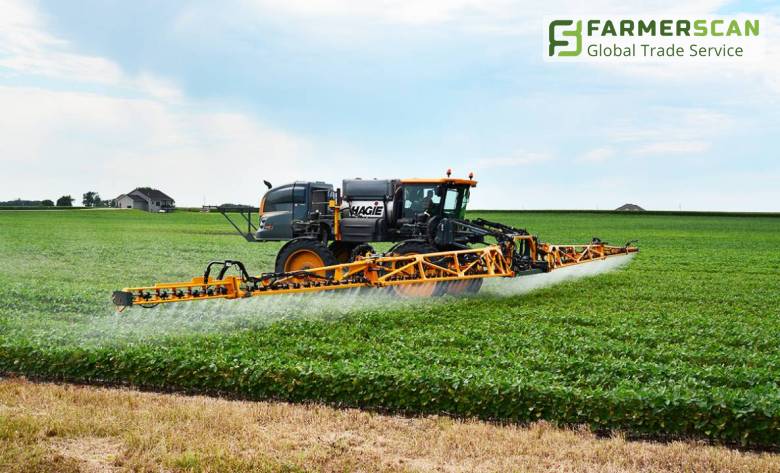
The use of herbicides is an essential component of modern plant protection technology. At first, weeds were fought with mechanical processing. However, with the development of the chemical industry and the discovery of new, more effective active ingredients, herbicides began to force out this method.
The herbicide is the common name in the world of chemicals that are intended for the extermination of adverse plants or simply defined, weeds. Today more than 150 chemicals are known, and the number of herbicides, which consist of various combinations of these substances, exceeds 600.
To get a grasp of the glut of preparations and to protect crops from weeds timely, as well as effectively, it is necessary to understand the operating principle of herbicides.
Herbicide classification
There are several ways to classify herbicides, depending on the treatment, chemical characteristics and nature of action on plants.
Herbicides are introduced on the market in solid and liquid preparative forms. It depends on the active substances and the form of their treatment.
There are herbicides of organic and inorganic origin chemically. Today, most of the produced herbicides are organic.
Non-selective and selective herbicides
The main division that is used in working with these preparations is the division of herbicides into non-selective and selective preparations.
The nonselective herbicide is a product that is used against all existing weeds. This herbicide destroys all plants, both annual and perennial. It is usually used for fields processing before sowing or after harvesting the crop.
It is most often available in liquid form. The application rate depends on the type of weeds prevailing in the field, as well as the phase of their development. The active substance, which is presented in most of the continuous herbicides, is glyphosate. In addition to agricultural fields, these herbicides are used in industrial areas, on roadsides, wastelands and other areas. If a non-selective herbicide is applied on the sowed fields, the treatment must be carried out in such a way that the sproutings will be not damaged.
Selective herbicides are preparations that are used to eliminate a particular type of weed, while they are safe for the main crop.
According to the degree of selectivity, herbicides are divided into:
Wide selective – destroy mono- or dicotyledonous weeds. So, preparations based on 2,4-D are toxic for dicotyledonous plants and safe for monocotyle, and this makes it possible to widely use herbicides on cereal crops.
Narrow selective – affect a separate class of weeds. An example of a narrow-selective herbicide can be a preparation that is based on the active ingredient triallate. This herbicide is used on crops of wheat against oats (latin: Avena fatua).
It should be noted that this division is rather conditionally. After all, the group to which the herbicide belongs is largely dependent on the concentration of the spray material and the application rate of the preparation. Thus, a non-selective herbicide at low concentration may become selective. At the same time, selective herbicide, at high doses, is able to destroy all treated plants.
Soil, foliar and root herbicides
According to the method of action, herbicides can be soil, foliar and root.
Soil-action herbicide is applied directly on the soil, creating a film that extirpates germinating weeds. Preparations of this group does not affect perennial plants or those plants that have already sprouted. The herbicidal screen, which is created by the preparation, extirpates the weeds at the moment of their germination.
Depending on weather conditions, humidity and soil type, the effect of a soil herbicide can last from several weeks to several months. This herbicide shows the best results on irrigated fields or under rainy weather conditions.
Foliar herbicides begin to work, when there is a contact with the vegetative mass of plants. These herbicides are divided into contact foliar and system foliar.
Contact foliar herbicide acts directly on the leaves and stems without affecting the root system. In the place, where the drop of the preparation fell, you can see necrosis or burn. Contact herbicides act in the place of contact, practically not spreading over the plant. Therefore, the uniformity of application and wetting of leaves with the spray material significantly affects the treatment efficiency. Desiccants, for example, diquat-based herbicides, such as Reglon Super, belong to this group of herbicides.
System foliar herbicide is also sprayed onto the plant surface, but at the same time, the preparation is absorbed and moves to the root, extirpating the weed completely. These preparations are effective against perennial weeds. The visual effect of the application of a system preparation does not appear as quickly as after contact herbicide. The first signs of an affection may appear in a few weeks. An example of system herbicides are preparations that are based on such active substances as glyphosate, 2,4-D, atrazine etc.
Root herbicides act on the root system of weeds. They are applied into the soil in the form of granules or drip watering (fertigation).
Herbicides before and after sproutings
Depending on the time of application, herbicides are divided into pre-emergent and post-emergent.
Pre-emergent herbicides are applied before and after sowing and for some time before crop sprouting. In most cases, this group includes soil herbicides and herbicides of continuous action.
Herbicide after sproutings is applied after the appearance of weeds. These herbicides usually have a contact or systemic effect, often with a soil effect. If post-emergent herbicides are applied on the sproutings of a cultivated plant, then such preparations are called insurance preparations.
There are herbicides that can be applied before and after sproutings, depending on culture, weather and other factors. An example of such a preparation could be Primextra Gold (based on S-metolachlor and atrazine). This herbicide, depending on the needs, can be applied both before and after the sproutings of corn or sorghum.
Tips for the work with herbicides
In conclusion, some important factors should be noted. It is necessary to pay attention to these factors by working with herbicides:
1. The choice of herbicide should be reasonable. In addition to the prevalent type of impurity on the field, it is necessary to take into account a number of factors, such as its forecrop, aftercrop, temperature, soil moisture, probability of precipitation in the nearest time, etc.
2. Compliance with the optimal time for application. Being late with the application of a herbicide negatively affects the effectiveness of the treatment. The stress of the cultivated plant is also possible. Both factors negatively affect yields.
3. The correct choice of the rate of the herbicide is one of the important points. Insufficient rate of the selected herbicide may simply not work. In the long run, weed resistance to a particular preparation is possible. An overstated rate may lead to the inhibition of crops or to have an after-effect on the following crops in crop rotation.
4. The quality of the preparation application. The uniformity of spraying of the spray material affects the effectiveness of both contact and systemic herbicides. Therefore, it is necessary to periodically check the nozzles and the quality of spraying.
5. Compliance with safety measures by working with herbicides. As the herbicides are chemical preparations, it is important to take special care when handling it, as well as by applying and storing.
6. Strict compliance with the manufacturer's instructions ensures the effectiveness of herbicides without damages to crops.