en
en
 de
de
 ru
ru
 uk
uk
 es
es
Currency selection
The entire agricultural market on one website
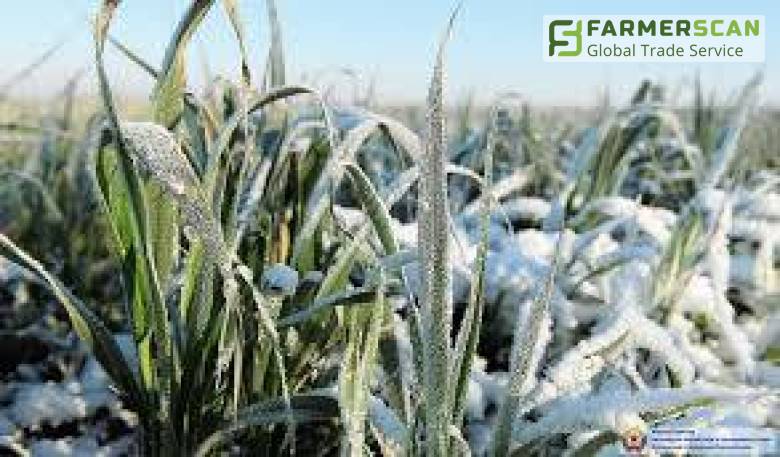
Before the renewal of the spring vegetation, the main task of the agronomist is to assess the crop condition. This phase is important for making decisions about possible re-seeding or fertilizer amount changing.
To rightly size up the situation on the field, it is necessary to understand the reasons affecting the overwintering of plants. Answers to the following questions will be able to help in this: what kind of frost can withstand the wheat, how differ the types of ice crust to each other, what is the allowed loss rate by over-wintering, and what agrotechnical methods will save the crops.
The overwintering are affected by the weather conditions: frost tolerance of the crop and agrotechnical measures.
The analysis of overwintering conditions is based on the characterization of adverse events, such as: winter killing, ice crust effects, rotting-out and others.
Winter killing is the death of plants under the influence of low temperatures. The ice crystals formed in the tissues damage the cells, as a result, the plant dies. Immediately after frost damage, the plants retain their natural green color, but after defrosting they quickly turn yellow and lose turgor. After affection, it is impossible to influence the situation.
To prevent winter killing, the choice of frost-hardy varieties, the application of phosphate-potassium fertilizer in autumn, an increasing of sowing depth and snow capture are important.
In addition to the particularities of the variety, the stage of plant development also influences the frost tolerance. In the tillering period, winter wheat can withstand up to -21 °С, and seedlings - only up to -12°С.
Before the renewal of the vegetation, frost tolerance of winter crops is reduced. After the beginning of aftergrowth, short-time cold snap to -10°C can lead to the complete freezing of crops.
At the time of the renewal of the vegetation, the norm is up to 10% of plant losses from freezing.
An ice crust is a layer of ice on the surface of a field that appears when there are changes of frosts and thaws. In particular years, the ice crust leads to the death and replanting of massive areas of winter crops. In 2003, as a result of frosts and a long stay under the reamed ice crust, 59% of winter grain crops died. The effect of ice crust on crops depends on several factors: the thicker the crust is and the longer it lays on the field, the lower the percentage of overwintering is. Thus, 25–30 mm of reamed ice crust, laid on the field for 15–20 days, will annihilate 30–40% of the plants. The same ice layer will lead to the death of 50% of the plants in a month. There are several types of ice crust – reamed, suspended and crust.
Reamed ice crust appears because of freezing of melt water or rain on the soil surface. It is especially dangerous by the full freezing in of plant.
To remove the ice crust, it is necessary to mulch it with peat, earth, defecate or other dark fertilizer, which will contribute to the melting of ice. This should be done only at the end of winter, when the ice begins to melt, to speed up the process.
Suspended (overhanging) ice crust, unlike reamed, forms on the surface of snowpack.
The rolling with toothed or ringed rollers is used against a hanging ice crust. Passages with a roller with width 10–15 m are made every 5 meters. This method should be used if the crust is not very thick and the risk of damage to crops is minimal.
Crust is crumbly ice on the snow cover, which does not harm the crops and does not affect the wintering.
Pushing-out leads to penetration of the tillering nodes, as well as disruption of the root of winter crops. It is observed on heavy soil or loosened and undeveloped soils during the next freezing and thawing of the soil. To prevent this problem, it is recommended to choose winter varieties with a deep bedding of tillering node and increase the depth of seeding. It is possible to improve the state of the fields after pushing out by rolling. This operation will press the tillering node back to the ground. It is necessary to apply an increased norm of nitrogen fertilizers. Harrowing is not recommended.
Damping-out is the death of crops, caused by the falling out of snowpack on the nonfrozen ground, which lasts for 80-100 days. Being for a long time under the snow, the plants runs out and dies. After snowpack melting, brown and depauperate plants are found.
Wetting through is the death of crops because of staying under the melt water for 10-15 days, and more. Damage often have a cellular nature. "Saucers" are formed on the fields, especially in maul and in the lowlands. During spring water stagnation within 10 days, up to 40% of plants are lost. Soil slitting helps against wetting through.
The crops weakened by damping-out or wetting through are affected by diseases, for example, a snow mold and root decay. For this reason, pertinent breed, protectant and optimal rates of nitrogen fertilizers are essential to protection.
According to experts, the causes of the death of winter cereals are as follows in percentage terms: frost-killing – 20%, ice crust – 15%, rotting – 10%.0020Modern protective measures, as well as agrotechnical methods will reduce the percentage of losses and increase yields.