en
en
 de
de
 ru
ru
 uk
uk
 es
es
Currency selection
The entire agricultural market on one website
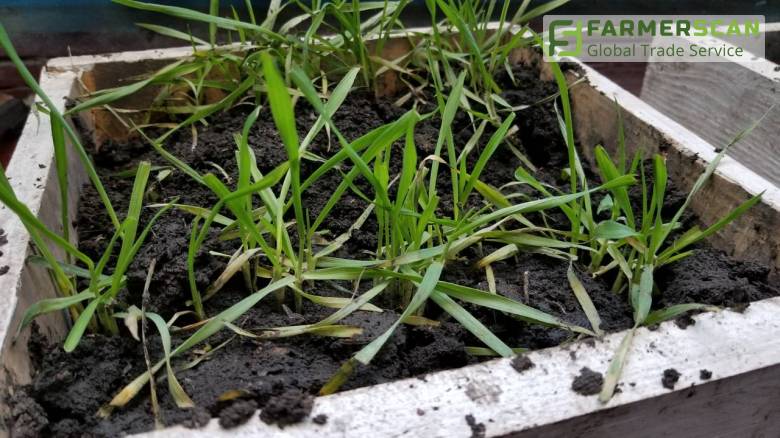
Monitoring the condition of winter crops is the main task of the agronomist in the winter and prevernal periods. For cereal crops, this is a “critical” time, when there is a high probability of frost-killing, asphyxiation and damping-off. Survey of crops let to make a timely decision on replanting or increasing fertilizer rates.
The main factor, by which the situation on the field is assessed, is the resiliency of plants. Assessment methods differ by the accuracy of results and duration. The method of monoliths, aqueous, sugar and accelerated methods are best known and widely used. These methods do not require special equipment and are available to everyone.
The monolith method is considered as the most accurate way of crops monitoring. Planned selection is carried out on January 25, February 25 and March 15. In case of hard frost or other negative developments, the survey should be repeated.
Monoliths are selected in 3-5 typical areas of the field, on the average – one sample per 20-25 hectares. If a few fields on the farm were seeded with one sort under the same conditions (forecrop, fertilizer, sowing time), samples collection from one of such fields will be enough. To get representative results, it is important to select typical areas that are distant from beams, hills and wood lines.
A monolith with a size of 30*30 cm and a depth of 15-20 cm is selected on the field in such a way that plants from allied rows form part of it. Samples are carefully placed in boxes, which are signed. The labels indicate the detailed information: crop, variety, forecrop, area and field number, as well as the date of sowing and the date of selection. If there is snowpack or ice crust, their size should also be indicated.
The process of defrosting and growing is divided into several stages:
|
Day |
Necessary conditions |
|
1-st day |
Defrosting of the selected samples at a temperature of +5-10°C. Plants are covered with wet bags, tarpaulin or other material. |
|
5-th day |
Monoliths are placed in the light at a temperature of +15-20°C, after cutting off the top at a height of 5-6 cm from the soil surface. The plants are watered so that the soil is sufficiently moistly. |
|
15-th day |
A precounting of revivable plants is carried out. Only plants, which produce new leaves, are counted. |
|
25-th day |
The final calculation of viability. Plants are carefully removed from the ground and washed with water. Then the total number of plants and the number of living plants are counted. Plants, which formed new leaves and roots, are considered as live. |
The counting is made as follows: X = (A:B)x100, where
X is the viability of sowing, %
A is the number of live plants in the sample, pieces
B is the total number of plants in the sample, pieces.
If the area of the monolith, the condition and the number of overwintered plants are known, it is possible to calculate the density of winter crops (thousand/ha).
The aqueous method is suitable for sampling from unfrozen soil and allows to carry out an analysis in 7 days.
The scheme of selection is similar to the previous one: samples are taken in 2-4 locations of the field from two allied rows that are 50 cm long. If it is necessary, the plants are defrosted and covered with pre-wet tarpaulin. Then the roots are washed off the ground and cut, so that it leaves only 3-4 cm. Leaves and scape are cut in such a way that they are 5-6 cm long. Then the plants are placed in a container with water so that the tillering node would be in the water. Growing is carried out at a temperature of 18 -20°C and sufficient lighting. Water is changed every 2-3 days. Counting of live plants, which gave new roots and leaves, can be carried out in a week. Plant viability is calculated similarly to the monolith method.
The sugar method gives the result on the 4th day. Samples are taken and prepared at the same way as by the water method. Before growing, the plant is immersed in a 2% sugar solution for 13-15 hours, then transferred to a container with water.
The accelerated method allows to evaluate the viability of plants in 12-16 hours. Every 100 meters, 30-50 plants are selected diagonally across the field. The roots, leaves and stems of the plants, which are washed from the ground, are completely cut off at a distance of 1-2 cm from the tillering node. Prepared samples are placed in a container with moistened filter paper or gauze. To maintain high humidity, the vessel is covered with a coating. Samples ripe 12-16 hours at a temperature of +24-26°C. After that, the exploring and measurement of plants are held. The growth of the limb by 3-5 mm points to the fact of the viability of plants. Samples that grew less than by 3 mm, have a low growth energy and are considered as dead. In comparison with the monolith method, this method of viability determining is less accurate and is better suited as a supplement.
In practice, there is another way to check the viability of crops.
For this purpose, a frame with a plastic film, which is stretched from above, is installed on the areas cleared of snow. They are placed in typical areas of the field (2 pieces per 1 ha). Under the film it is created a kind of greenhouse conditions that contribute to the accelerated development of winter crops. This method allows to assess the viability 7-10 days earlier than on the main array.
The final visual analysis and calculation of viable plants is carried out in 2 weeks after the start of regrowth. Depending on the phase of development, plant thickness and timing of the renewal of the growth, further decisions are made.