en
en
 de
de
 ru
ru
 uk
uk
 es
es
Currency selection
The entire agricultural market on one website
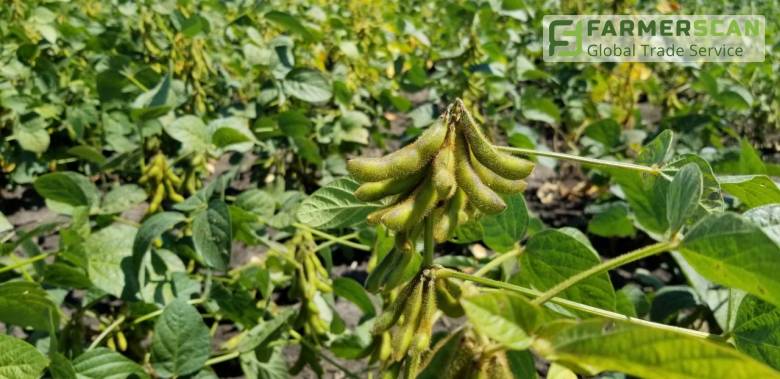
Experts predict that in the 2018-2019 marketing year, the export of grain and oilseeds will reach 52 million tons, which will exceed the current record. Main grain volumes are bought in Asia, the Middle East and North America. Each country has its own specific requirements for products.
Tetiana Lapytska, head of the phytosanitary security department of the head department of the State Service of Ukraine for Food Safety and Consumer Protection in the Kirovohrad Oblast, told within the context of the research and practice seminar, what you need to know when forming grain export consignments, and what phytosanitary requirements are put forward by the partner countries.
The main factor by the grain sale on the international market is its quality, which must satisfy the requirements of the country, to which it is exported. In the case of failure of these requirements, the exporting country receives a notification message – a document certifying the non-compliance of the cargo with the phytosanitary requirements.
"In 2018, 23 notification messages were received due to the fact that soybean seeds did not satisfy the phytosanitary requirements of Eurasian Union. Almost 70 thousand tons of soybeans did not satisfy the requirements of Belarus. This amount of soybeans is a significant part of the total volume of exported grain", said Tetiana Lapytska.
Grain, seeds, vegetables, fruits, timber, which are loaded out for shipment to the Eurasian Union, should be grown on land plots that have the status – clear of quarantine organisms. One of the quarantine weeds in the countries of the Eurasian Union is Striga spp., as well as ambrosia in Ukraine.
Very specific export conditions are in China. There are three protocols of phytosanitary requirements in China regarding barley, soybeans, and corn. The main requirement is that all products must be examined during the vegetation period. An additional condition for the export of barley – products must be grown on the areas that are clear from dwarf smut (Tilletia controversa).
After a short-term market foreclosure, Indonesia came to terms with Ukraine, raising the following requirements:
- be examined;
- have confirmation that wheat is not infected with smut balls;
- pass heat treatment.
"The year 2017 was a transitional period, and it was still allowed to ship grain that wasn't grown on clear areas. In 2018, strict requirements are applied to products. Grain must be provided with appropriate documents, the examination of crops is also required during the vegetation period", – noted the expert.
Note: clear area – land plot examined by phytosanitary inspectors, with official conclusions that this area is clear from a specific type of pest.
The procedure of determination of ground plot is quite simple. To do this, it is necessary to submit a list of documents to the State Service of Ukraine for Food Safety and Consumer Protection: the application, the location plan of the land plot and the document that confirms the ownership right. The phytosanitary inspector makes crop examinations and takes samples during vegetation. After receiving the results of the analysis, if all indicators comply with, the status of a clear land plot is established by the order.
The examinations are conducting only during the growing season. When the grain is already at stock, a status confirmation document cannot be received. Therefore, at the beginning of the sowing campaign it is worth considering, where the grown products will be sold and to plan the examination in advance.
Contact your nearest phytosanitary inspection or the Office of Phytosanitary Security to receive more information.