en
en
 de
de
 ru
ru
 uk
uk
 es
es
Currency selection
The entire agricultural market on one website
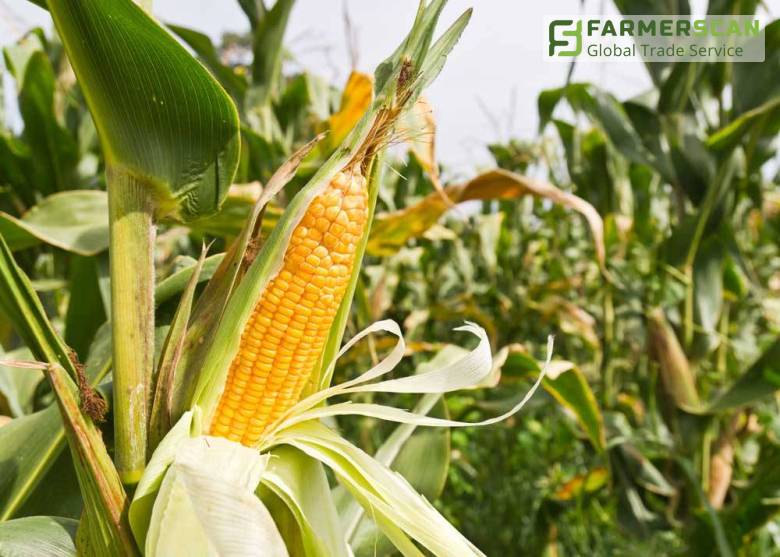
Crop breeders say that 50% of crop productivity depends on the correct choice of corn seeds. However, sometimes it is difficult to choose among the variety of sorts and hybrids. Homeland and foreign producers offer corn seeds with such characteristics – extensive and intensive, early-ripening and late-ripening, dent, flinty, betweencrop, resistant to drought, diseases, and so on. In this article, the FarmerScan team will try to understand the key aspects of choosing a hybrid and mark out the main ones among them.
The choice of a hybrid, first of all, depends on the agro-climatic zone, in which the farm is located, as well as on the growing period of corn, the rate of cold endurance, drought resistance and water-yielding capacity. Let's consider these points in more detail.
Maturity group
Usually, corn dividing according to maturity group is used, which was developed by the Food and Agricultural Organization, abbreviated as FAO. According to this classification, the ripening terms are defined by units, which characterize the need of a hybrid in the effective temperature for ripening.
In Ukraine, this rate varies from 100 to 599. However, extreme values of maturity groups are not popular among farmers:
The greater the FAO rate, the longer the growing period, the greater the number of leaves on the plant and, consequently, the greater the potential yield. However, late ripening hybrids usually have greater grain moisture, which leads to additional costs for drying. The yield decrease is also possible under dry conditions during the grain-filling period. In practice, hybrids with FAO 250-350 are in the greatest demand as the golden mean between high yields and fast pace of water-yielding capacity.
Cold endurance
Corn is a culture that is inflexible to the sowing dates, which, in its turn, depend on the soil temperature on the depth of seeding down. If you sow corn in cold soil, it will shoot up to 4 weeks, losing germination energy and viability.
According to the soil temperature during the sowing period, the following time periods are distinguished:
At the early stages, it is recommended to sow more cold-resistant flint or siliceous corn. Cold-resistant hybrids can be sown 10-15 days earlier than the optimal term, and seedlings can be obtained 5-7 days earlier. This allows to increase yields, especially with insufficient moisture supply in the second half of the vegetation period.
It is desirable to sow dent hybrids in optimal time with an average daily temperature of soil in + 10°C. Corn of this type is more demanding of the temperature during sowing, but it gives up moisture better at the time of harvesting.
Drought resistance
Drought is one of the factors that reduces yields. The combined drought is especially dangerous, when the lack of water in the soil coincides with the influence of dry and hot air. In the Central region, such phenomena are possible at the end of June-August, that is, during grain-filling period. For today, the majority of seeds companies present hybrids with increased stress resistance, including air drought.
Fast water-yielding capacity
Wet grain requires additional drying, what increases production expenditures and slows down the harvesting. On the contrary, fast water-yielding capacity spares funds of agrarians and contributes to the timely harvesting of corn before the fall of the autumn rains and the beginning of frost. Based on the experience of producers, the best rates of water-yielding capacity has corn of foreign breeding.
By choosing a hybrid, it is important to consider the specific conditions of the farm and observe the growth technology. This will allow to realize the potential of the hybrid, which is laid in it genetically, and get the maximum yield. In the next article, we will talk about the recommendations of the supplying companies about choosing of corn hybrid. Check for updates.