en
en
 de
de
 ru
ru
 uk
uk
 es
es
Currency selection
The entire agricultural market on one website
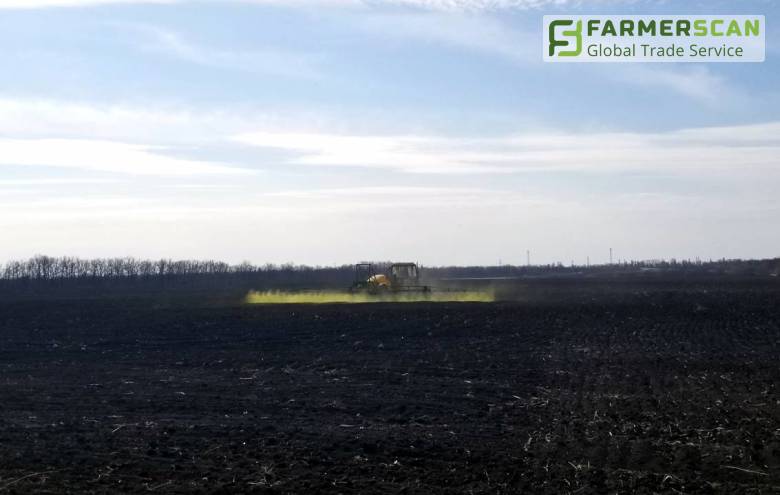
Soil herbicides play an important role in the multipronged weed attack, especially in wide-row sowing. They protect seedlings of cultivated plants during the first 20-40 days at the most critical period of growth.
However, not every agronomist can correctly use this protection system tool. We recommend to get acquainted with the list of factors that affect the efficiency of soil herbicides, if you don’t want to complain about the weak effect of the preparation or a fake preparation.
1. Species composition of weeds. The choice of preparation depends on the prevalent weeds. If there are mainly rootstock, offset or other perennial weeds on the field, soil preparations will not help in this situation, as these herbicides function only against annual plants. It is necessary to use other preparations and tillage operations against perennial weeds or to destroy it in the sowing of forecrop. The preparations have different spectrum of action, some are effective against grass weeds, others – against dicotyledonous weeds. It is advisable to use a combination of several active ingredients to expand its action.
2. Application conditions:
- High-quality soil preparation. An aggregate structure is considered as optimal, which contributes to regularly spaced distribution of the preparation over the surface of the field. 50% of the effectiveness of the soil herbicide depends on the quality of soil preparation.
- Aggregate-size distribution and amount of organics. Heavy mouldering soil block action of the active ingredient partially. As a result, weeds need a smaller amount of the preparation. For this reason, minimum norms of herbicides can be applied on light soils.
- Acidity. On acidic soils with a low pH level, the active ingredient breaks apart faster.
- Humidity. The key to good effectiveness of soil herbicides is a sufficient amount of moisture in the soil. Over-dried top soil prevents the action of the herbicide.
3. Weather effects
Depending on the weather, there is a different level of efficiency of the soil herbicides in different years.
Let’s consider three main options for weather conditions in the spring:
1) Warm spring without precipitation
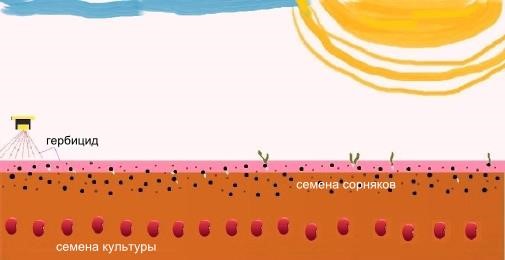
Under such conditions, the main part of the herbicide lay on the field surface. Due to the lack of moisture, the preparation does not act in the soil. Weeds sprout below the herbicidal screen without damages.
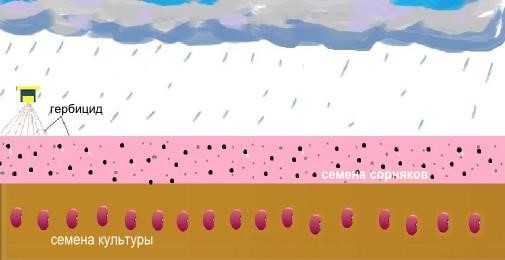
2) It rained after application of the soil herbicide
Under such conditions, the preparation penetrates into the top soil, where there is the bulk of weed seeds. The herbicide penetrates to weed shoots with moisture, as a result the sprouts die.
3) Heavy precipitation after the application of soil herbicide
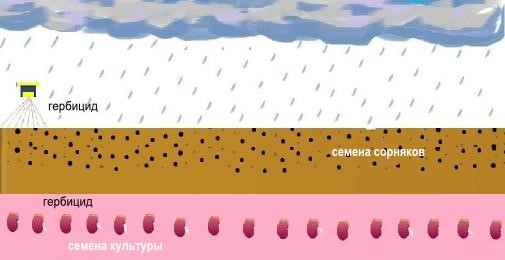
Excessive soil water leads to the penetration of soil herbicides to the area of sowing culture. Under such conditions, signs of phytotoxicity and general inhibition of crops appear on the plants. In critical situations, reseeding is possible. Weeds sprout in the top soil, avoiding damages.
Unfortunately, it is almost impossible to predict the weather conditions for the next season. Therefore, we recommend the usage of preparations with a low level of phytotoxicity or with an antidote as a component of the preparation for reducing the risks.
4. Tillage technology
The recommendations of soil preparation manufacturers are based on the correct preparation of the field with the minimum amount of plant residues and aggregate soil structure. The followers of minimal and zero technologies need to consider the possibility of reducing the effectiveness of soil preparations and increasing the rate of their application.
5. Incorrect preparation rate
The decision, which is based on the factors listed above, is made on the rate of preparation application. Insufficient amount of the preparation leads to poor protection of crops against weeds. The large doses of herbicides can have an effect on crop plants, which will negatively affect the yield.
6. The breakdown of the herbicidal screen
Soil herbicides form a protective screen on the surface of the field, which keeps down the weeds during germination. Intercultivation and additional machinery runs on the field break down its continuity and reduce its effectiveness.
7. High-quality preparation application
The main recommendations are the same as for most herbicides: air temperature is 10–25°C, wind speed is up to 4 m/s. For an uniform coverage and application to the soil, it is recommended to increase the amount of the spray material to 400 l/ha, using small-drop sprayer. Only due to high-quality treatment, the effectiveness of the herbicide increases by up to 10%.
Considering these factors during the treatments planning, you can achieve high efficiency by the usage of soil herbicides. In conclusion, we add that it is important to read the instruction or to consult a representative of the manufacturer before applying a new preparation. If there are obligatory conditions of use (for example, embedding into the soil) for a specific herbicide, it cannot be neglected.