en
en
 de
de
 ru
ru
 uk
uk
 es
es
Currency selection
The entire agricultural market on one website
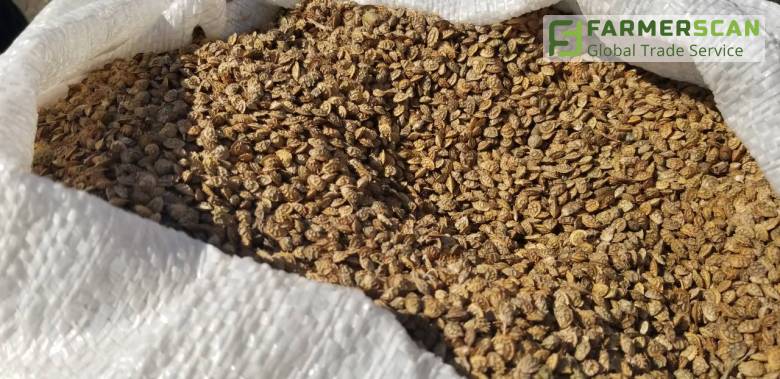
Sainfoin is a feed crop, which animals eat with pleasure. It is as good as clover and lucerne in matter of digestible protein, calcium, phosphorus, vitamins and the number of fodder units and surpasses these cultures in drought hardness.
Today, only the Institute of Agriculture of the steppe zone of NAAS works on selection and varieties breeding of sainfoin in Ukraine. The FarmerScan-team was present by the sowing of seed plots and talked with the head of the operational department Serhii Chipliaka.
Tell us, please, which variety are you sowing?
On this field, we are sowing the national standard, the variety "Smaragd", which was registered in 2007. On the next field, we have sowed a newer variety "Vegas", which focuses more on nutrition and protein content in the green mass. Both varieties are created by employees of the Kirovohrad Experimental Station, which is known as the Institute of Agriculture of the steppe zone.
What is the advantage of sainfoin over lucerne?
Under our conditions, the yield of sainfoin is as good as of lucerne. In addition, it is more heat-resistant and uses moisture, stored in the autumn-winter period, more efficiently.
Unlike lucerne, which is mowed 3-4 times a year, sainfoin produces one or two mowings. This is an additional saving of fuel and other resources.
Animals eat it with the stems, while they prefer only leaves by lucerne. In addition, sainfoin does not cause bloating by animals. It is not necessary to dry it before feeding; you can give it even after rain.
What is the seeding rate of sainfoin?
It is recommended to sow 4.5-5 million seeds per hectare (in physical weight it is about 100 kg/ha, it depends on the mass of a thousand seeds) to get green mass. If the viability is good by sowing for grain, it can be limited to 2 million/ha or 30 kg/ha.
What is the best row spacing by sowing?
Now we sow experimentally with the planting width 15 cm. 12.5 cm or 70 cm is considered as the classic row width. The advantage of wide-row sowing is that it is possible to do intercultivation and not to apply herbicides. As experience has shown, the spacing has no impact on yield of seeds.
What protective measures do you plan to take on the seed sowings?
Before sowing, the soil herbicide “Stomp” was applied at a rate of 2.5 l/ha. The conditions for treatment were optimal, so even this minimum rate should last. This herbicide was applied for the first time, previously we used "Treflan".
As postemergent herbicides, we use "Bazagran" and "Achiba". As practice shows, it is better to use postemergent herbicides on second-third year of sainfoin life. The phase of application is 2-3 leaves of the plant, at this time the weeds are usually overgrown, the preparation has little effect on it.
How does culture react to fertilizer application?
Sainfoin does not like acidified soil, therefore it may even react negatively to fertilizers. If it is necessary, you can apply a small starting dose of fertilizer to support the development of plants before the start of the effect of nodule bacteria.
When is it best to mow the sainfoin for green food?
If you proceed from the development phase, it is optimal to mow 2 times. The plants contain the maximum amount of protein at the time of flower-bud formation. Unfortunately, the best quality indicators are combined with low yields. Therefore, harvesting at the beginning of flowering is the best way. With the appearance of the first flower on the field, the level of yield increases up to 40%, while the reduction of protein is insignificant. It is mowed in May for the first time. With sufficient amount of precipitations in July, you can mow a second time.
In the mowing of which year do they seed?
If the field is clean, the seeds can be harvested during the first year. Before harvesting, it is necessary to determine the biological yield, to calculate the profitability. Due to the fact that we have applied the soil herbicide, we will try to harvest the seeds this year. In the first year of sowing, harvesting will be held closer to September. In the second and third year of the growth – not later than on 2 August.
What is the average yield capacity?
The yield of sainfoin herbage is about 270-350 centners/ha. The seed productivity is 0.8-1.2 c/ha. The harvesting is held in two steps – firstly, sainfoin are mowed windrow, then – picked up.
How much do sainfoin seeds cost?
The average cost of seeds is 20 UAH/kg, with a seeding rate of 100 kg/ha, the cost of a hectare rate will be 2000 UAH. If we consider that the field will be used for at least 3 years, then the annual expense is at the level of 670 UAH, which is not very much.
Thus, the sainfoin will be interesting for owners of livestock breeding complexes, as well as for private farms. After all, in addition to the economic benefits and simplicity of cultivation, feeding with sainfoin feed increases milk yield and improves the general state of animals.