en
en
 de
de
 ru
ru
 uk
uk
 es
es
Currency selection
The entire agricultural market on one website
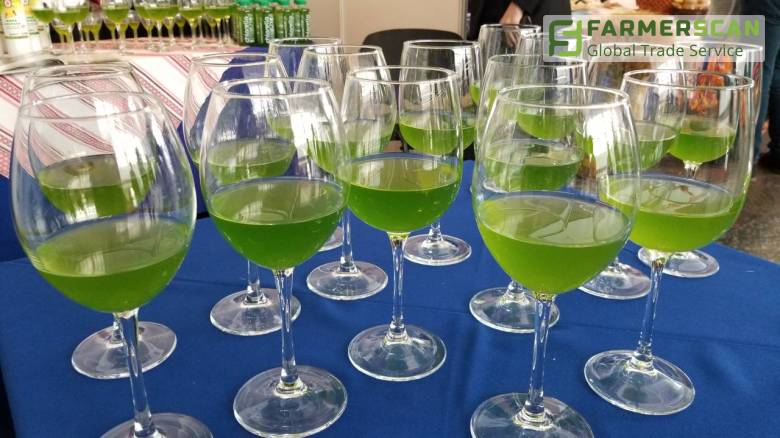
Quality reduction of agricultural products and their taste properties is directly related to the use of chemicals. To reduce the number of chemical treatments, they are replaced by biological ones, including chlorella.
Chlorella is a one-celled alga with unique qualities that has been successfully used in various industrial plant growing, beekeeping and fish farming. For livestock and poultry farming, chlorella is an alternative source of protein, vitamins and amino acids. It contains 40-55% of protein and exceeds with this rate even lucerne. If in terms of one ha, alga gives 20-30 tons of pure protein, then lucerne – 2-3.5 tons.
6 facts about chlorella:
- chlorella contains 40 amino acids, including all essential ones;
- the champion in the content of vitamins of group B, vitamins A, E;
- the only natural source of vitamin B12 for vegans;
- contains more protein than chicken meat or an egg;
- is used for air regeneration in submarines;
- is included in the ration of astronauts.
Use and scientific testing
Samvel Mkrtchian, head of the first chlorella farm in Ukraine, told the representatives of the website farmerscan.com about the benefits of alga and its application methods.
The farmer told that research on chlorella is being conducted in various fields of application:
“In Dalnik, Odessa Oblast, pigs are fed with chlorella over a month and a positive effect is already noticeable. The research of the Institute of Beekeeping of Ukraine showed that adding chlorella to syrup perennializes the life of bees on 20%. Result is impressive. In March, the tests are planned to be continued”, says Samvel Mkrtchian.
“The properties of chlorella were also studied in the Institute of wine growing and wine making named after V.Tairov. Three-time treatment of grapes during the growing season gave 500-600 g of increase compared with the test area. Industrial tests were also carried out in the "Shabo" company on 1 hectare of grapes. ”
According to the farm owner, there is also experience in the use of chlorella in the fields. In addition to leaves treatment, algae are applied into the soil and seeds are treated with it.
“In Kuchurhan, Rozdilna Raion, a farmer sowed wheat and sunflower with application of chlorella this year. He has received 200 kg/ha yield increase. The following year, tests are planned on 15 hectares of wheat and barley with the application into soil, seed and leaf treatment. Visually, the difference between treated and non-treated crops is already noticeable”, said Samvel Mkrtchian.
In fish farming, chlorella is used for ponds cleaning and water enrichment with oxygen. In summer, with heat wave, the level of oxygen in the water decreases sharply and the fish perishes.
“In the pond fish farm "Try Karasia" was applied 20 l/ha of chlorella this year. Every summer are killed 7 tons of fish. After treatment with chlorella, the indicator decreased to 2 tons”, said Mkrtchian.
The cost of chlorella differs depending on the application method: for ponds – 25 UAH/l incl. VAT, for plant growing – 32 UAH/l incl. VAT. Drinking chlorella is more expensive – 50 UAH/l, due to the complexity of the production process.
Birds without antibiotics
Taking care of the quality of the products, on the farm “U Samvela” hens and chickens are watered with chlorella suspension. Suspension, which is opposed to chlorella, is in the form of powder or tablets. It does not lose nutrients during drying and is better absorbed.
As a result, there was the percentage increase of hatchability of eggs, the stamping-out of birds decreased. An increase of egg weight and carotene content are also noted.
According to Samvel Mkrtchian, the content of chlorella in the diet allows you to avoid taking antibiotics:
“We fed chickens with chlorella for a year and we have never used antibiotics. For export to the European Union, a hatching egg is transported with a hatchability rate of 82%. Our rate is higher than the standard by 5%", said the owner of the farm.